

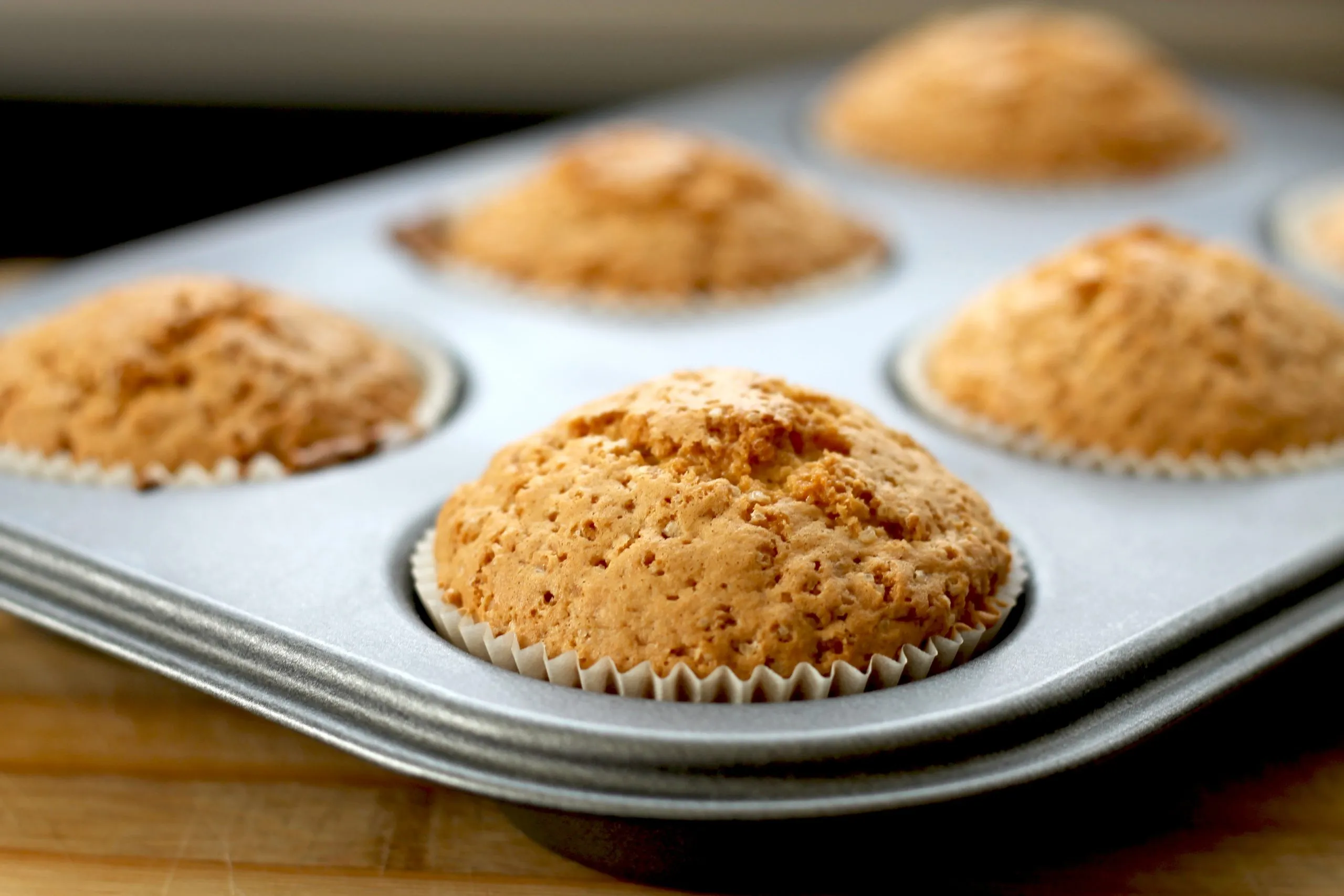
A good muffin should be tender, domed and moist, with a crumb that pulls apart easily rather than one that feels dense or rubbery. Muffins are one of the simplest bakes you can make, which is exactly why they are so often made badly: the recipe looks easy, so it is easy to rush. The good news is that the difference between a heavy muffin and a light one usually comes down to a handful of small habits rather than special equipment or unusual ingredients.
The muffin method in a nutshell
Most classic muffin recipes use what bakers call the muffin method. The dry ingredients (flour, sugar, raising agents, salt and any spices) are whisked together in one bowl, and the wet ingredients (eggs, milk or yoghurt, and melted butter or oil) are whisked together in another. The wet mixture is then poured into the dry, and the two are folded together briefly.
This is quite different from making a cake, where butter and sugar are usually creamed together first to trap air. Muffins rely mainly on baking powder or bicarbonate of soda for their rise, so the job of the mixing stage is simply to combine everything, not to build volume.
Why overmixing is the biggest mistake
As soon as liquid meets wheat flour and you start stirring, gluten begins to develop. A little gluten gives structure, but too much makes muffins tough, chewy and full of long tunnels. That is why most recipes tell you to stop mixing while the batter still looks lumpy, with a few streaks of flour visible.
Use a large spatula or spoon rather than a whisk or electric mixer, and fold with as few strokes as you can manage. If you are adding fruit, chocolate chips or nuts, toss them in a spoonful of the flour mixture first and fold them in at the very end, so they are spread through the batter without extra stirring. It can feel wrong to leave the batter so rough, but the lumps disappear in the oven.
Getting a good rise and a domed top
A few practical details make a noticeable difference to how muffins look when they come out of the oven:
- Check that your baking powder is in date, because old raising agents lose their strength.
- Fill the cases generously, usually close to the top, so the batter has something to climb above.
- Start in a hot oven. Many bakers begin at a higher temperature for the first few minutes and then turn the heat down, which encourages a quick rise before the crust sets.
- Let the batter rest for a short while before baking if the recipe allows it, which gives the flour time to absorb the liquid.
Always follow the temperatures and timings in your recipe as a starting point, since every oven behaves a little differently. A skewer pushed into the centre should come out clean or with a few moist crumbs, not wet batter.
Keeping muffins moist
Oil tends to give a softer, moister crumb that stays tender for longer, while melted butter gives more flavour. Some recipes use a mixture of both. Yoghurt, buttermilk or soured cream add moisture and a gentle tang, and mashed banana or grated apple can do a similar job in fruit muffins. If you enjoy fruit-based bakes, our healthy banana bread uses many of the same ideas in loaf form.
Once baked, leave the muffins in the tin for a few minutes, then move them to a wire rack so the bases do not turn soggy. Store them in an airtight container once they are completely cool. Muffins also freeze well, so it is worth baking a full batch and setting some aside for busy mornings.
Flavour ideas through the year
One basic batter can carry you through every season. In winter, try orange zest with dark chocolate, or a little cinnamon with chopped apple. Spring suits lemon and poppy seed, while summer is the time for fresh berries. In autumn, pumpkin purée, mixed spice and toasted pecans make a warming combination. A sprinkle of demerara sugar or a simple crumble topping on top before baking adds a pleasant crunch.
Muffins are a great way to practise the basics of baking without much risk, and the habits you learn here, measuring carefully, mixing gently and getting to know your oven, carry over to every cake you make. For more ideas, have a look through our baking cakes page and find your next weekend project.